
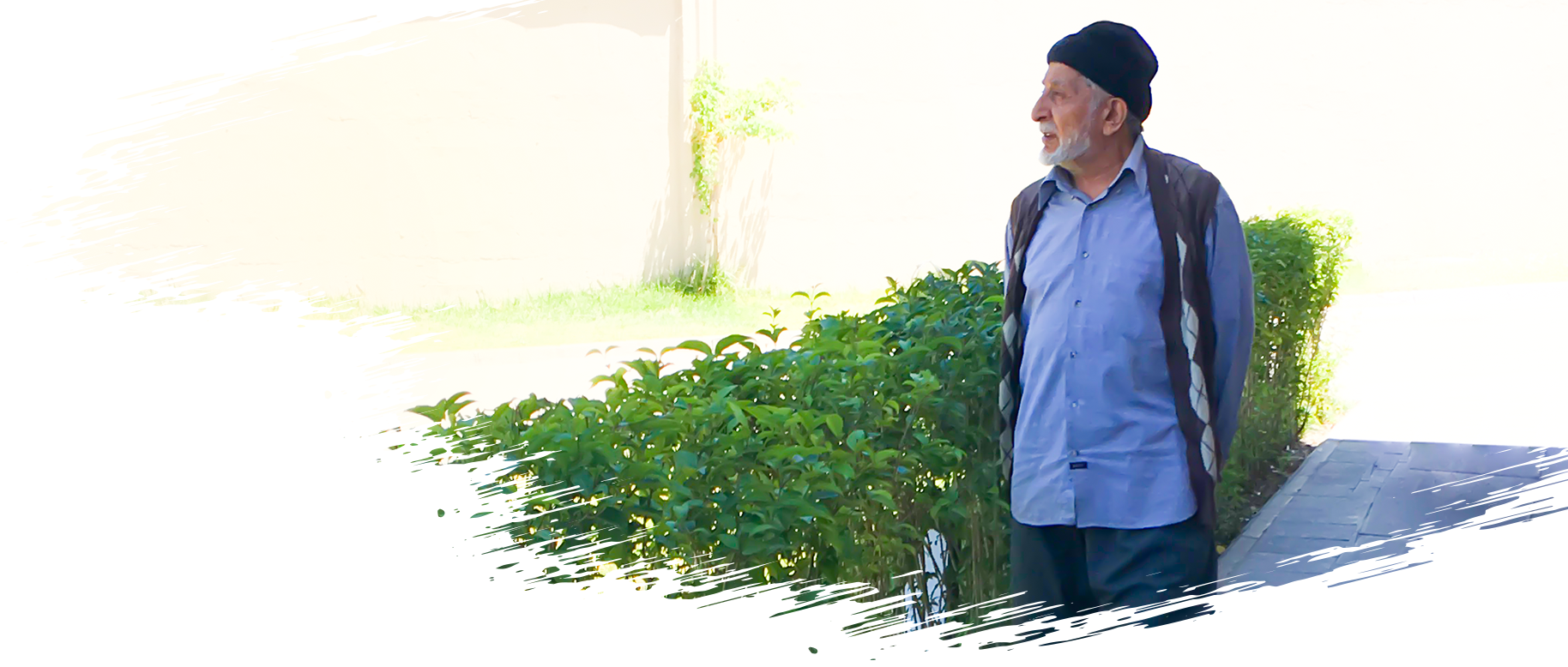
23 November 1943…
Üstad Hilmi KOCAASLAN was born on 23 November 1943 in the Paşaköşkü neighborhood of Malatya, in a detached two-storey house with many rooms, as the second child of a family devoted to the Islamic tradition. His father is known as Hasan Hoca, who came from the Karagöz neighborhood in the center of Malatya and served as an imam in the Adafı neighborhood. In 1956, at only 12-13 years of age, together with his father Hasan Hoca, he began his scholarly and intellectual development by attending the Risale-i Nur talks of elder brother Mehmet Kayalar in Diyarbakır.
When he was only 16…
He wrote a letter to His Eminence Üstad Bediüzzaman Said Nursi and at the end of the letter said, “Will you accept this 16-year-old beloved of yours as your spiritual adopted child?” This request was accepted by His Eminence Bediüzzaman; the letter was approved by Üstad Bediüzzaman, who put his seal on it, and the Üstad again gave the instruction for it to be published.
When he was 16, three months after the passing of Üstad Bediüzzaman Said Nursi to eternity, the coup of 27 May took place; many well-known Islamic figures of that period, together with elder brother Mehmet Kayalar, were arrested, and after various tortures and exiles, in 1963 the elder brothers, Mehmet Kayalar among them, were released and the Islamic services began again.
His Islamic struggle in the 1970s…
Üstad Hilmi KOCAASLAN performed his military service between 1963 and 1965, and after his military service, which was rather troubled, he married in 1965. As a result of a trial that began during his military service, he stayed in Malatya prison for 6 months and was then released.
In the 1970s, at the age of only 27, he began his writing life; his writings were published on a great variety of platforms and made a serious impact at that time. In 1973, that is, at the age of 30, he wrote pieces under 15 different pseudonyms in the Fikir Meydanı column of Milli Gazete. He continued writing regularly in Fikir Meydanı until 1975, but in 1975, after the newspaper offered him money because of the articles he had written, he put an end to his writing.
In 1975, at the age of 33, he began working at the Diyarbakır Directorate of Public Works and shortly afterwards had his post transferred to Malatya. During this period, although he took an active role in many enterprises such as Ensar Dağıtım and Hizmet Tüketim, he left these enterprises because he saw attitudes and behaviors that were contrary to his Islamic goals.
With the Islamic Revolution…
This great man of struggle, who found what he had been seeking with the Islamic Revolution of 1979, became firmly convinced that the Islamic Revolution was the Mahdi Revolution that His Eminence Bediüzzaman Said Nursi had pointed to, and a heartfelt attachment arose in him with great love.
In order to destroy the possible regional influence of the Islamic Revolution, the 12 September Military Coup took place, and an atmosphere of intellectual conflict was created to drive a wedge between conscious Muslims and the people. Thus our distinguished and respected Hoca, who entered the struggle to introduce Pure Muhammadan Islam against those who waged an unscholarly intellectual war against the Sunnah, the hadith and Sufism, limited the influence of Wahhabi and takfiri thought in various settings and on various platforms. Later, in 1983, together with many friends, he opened the Davet Bookstore and tea house, establishing a new base for his struggle.
With the scholarly articles he wrote in İstiklal magazine in 1987 and in Şehadet magazine in 1988, he stepped into publishing life again. In 1990 he published his own magazine called İslami Davet and was thus able to present his ideas and thoughts to the Muslim public more freely. İslami Davet Magazine, of which 8 issues were published, ceased publication in August 1990 for economic reasons. During this period he attended many conferences held in the Islamic Revolution, and the scholarly and intellectual truths he presented at these conferences were later turned into books.
A hero in the Hizbullahi struggle…
In 1998, as a result of a plot, he was taken into custody together with dozens of people, arrested and put in prison. He personally answered, one by one, all the allegations directed at him by the court, showed that the charges brought against him were groundless, and was released after 4 months. His trial continued without detention until 2004, and in 2004 he was acquitted of all charges.
Our Hoca, who continued to enlighten our Muslim people with his talks, also contributed to the awakening of society from a different angle through the poems he wrote and the setting to music of some of these poems. This great man of struggle, who for a long time continued his consciousness-raising services in modest settings, struggled until the end of his life for Pure Muhammadan and Revolutionary Islam through his writings, poems and talks.
And the rank of martyrdom…
Our Hoca lost his daughter to the coronavirus on 8 May 2021, and 5 months later he and all the members of his family caught the coronavirus. On 13 October 2021, after 25 days in intensive care, our distinguished, respected, struggling Hoca of great learning, and on 18 October 2021 his precious and venerable wife, attained the rank of martyrdom.
It is not possible to describe our Hoca’s life full of struggle and his many-sided personality within these limited pages. The prophetic and steadfast movements of the Hizbullahi Muslims in Turkey are tiny gleams and rays of our Hoca’s blessed life and exalted cause. May Allah the Exalted grant us success, through this feeble life of ours, in becoming a tiny mirror to that great man’s sacred path and movement, and in keeping alive his divine cause, his life and his memories by our ideas, thoughts, deeds and movements.
We entreat our exalted Lord to shower endless lights and mercies upon this exalted person, and we once again offer our condolences to all Muslims who feel the pain of his departure from among us and of his absence.
And peace be upon you, and the mercy of Allah and His blessings.